
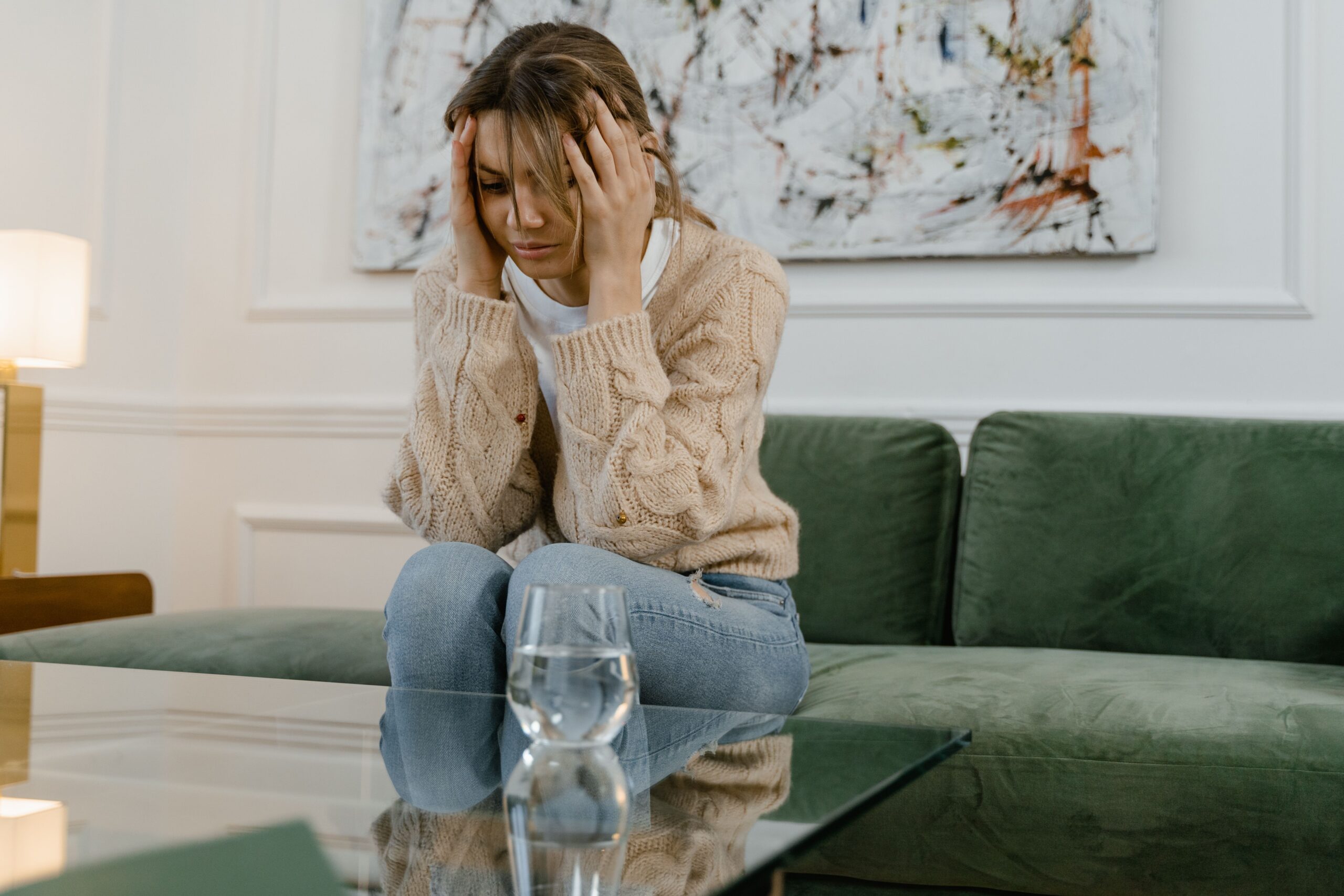
You get dressed in the morning, and your jeans fit fine. By two in the afternoon, your stomach is so distended you look six months pregnant, and you’re quietly undoing the top button under your desk hoping nobody notices. If you’ve spent hours searching for IBS bloating women symptoms trying to figure out whether what you’re feeling is normal, I want to say something first: you’re not imagining it, and you’re not overreacting.
IBS bloating is different from the bloating you get after a big meal. It builds through the day, it comes with pain that shifts location, and it can show up even on days you barely ate anything unusual. Women are diagnosed with IBS at roughly twice the rate men are, and yet so many of us spend years being told it’s stress, or normal digestion, or “just how your body is.”
This post walks through what’s actually happening in your gut, the symptoms women describe most often, what tends to make it worse, and what a doctor will typically want to check before you settle on IBS as the explanation.
Why IBS Bloating Feels Different From Regular Bloating
Regular bloating usually has a clear trigger. You ate too fast, you had something salty, you’re a day or two out from your period. It comes, it passes, life moves on.
IBS bloating works differently because IBS itself isn’t really a digestion problem in the way we usually think about it. It’s a disorder of how the gut and the nervous system communicate. The muscles in your intestine may contract irregularly, gas gets trapped instead of moving through normally, and the nerve endings lining your gut become more sensitive than they should be. That last part matters a lot. Something that would register as a mild pressure in someone else’s body can register as sharp pain in a gut with IBS.
The Gut-Brain Connection
Your gut has its own nervous system, sometimes called the second brain, and it’s in constant conversation with the brain in your head. When that communication gets dysregulated, which is common with IBS, your gut can become hypersensitive. Stress doesn’t cause IBS, but it absolutely can turn up the volume on IBS bloating symptoms you’re already dealing with. That’s why a stressful week at work often lines up with the worst flare of the month, even if your diet didn’t change at all.
Common IBS Bloating Symptoms Women Describe
Every woman’s experience looks a little different, but these are the patterns that come up again and again when women talk about IBS bloating symptoms:
- Abdominal distension that’s mild in the morning and noticeably worse by evening
- Pain or cramping that eases, at least partly, after a bowel movement
- Alternating between constipation and diarrhea, sometimes within the same week
- Bloating that intensifies in the days before your period
- Feeling uncomfortably full after eating only a small amount
- Excess gas paired with a sense of urgency to use the bathroom
If several of these sound familiar, that’s worth bringing to a doctor. IBS is typically diagnosed after ruling out other conditions like celiac disease, inflammatory bowel disease, or thyroid issues, since a lot of these show up looking similar on the surface.
IBS-C vs IBS-D Bloating
Not all IBS bloating feels the same, and knowing which pattern fits you can change what actually helps. With IBS-C, the constipation-predominant type, bloating tends to build slowly and steadily, since things aren’t moving through as they should and gas has nowhere to go. Women with this type often describe feeling most swollen by late afternoon and getting some relief overnight.
IBS-D, the diarrhea-predominant type, tends to bring bloating that spikes fast, often paired with urgency and cramping that hits within an hour or two of eating. Then there’s IBS-M, the mixed type, where symptoms swing between the two from week to week, which understandably makes it the hardest to predict. Telling your doctor which pattern matches you speeds up getting a management plan that actually fits, instead of generic advice that only works for one type.
What Makes IBS Bloating Worse
A few things tend to show up over and over as flare triggers. Not every trigger applies to every woman, which is part of what makes IBS so frustrating to manage on your own.
- High-FODMAP foods like onions, garlic, wheat, and certain fruits ferment quickly in the gut and can produce extra gas
- Stress and anxiety spikes, even ones you don’t consciously register as stressful
- Hormonal shifts before your period, when progesterone changes can slow digestion
- Eating too fast or talking while eating, which means swallowing more air
- Carbonated drinks, for the same reason
- Poor or irregular sleep, which affects gut motility more than people expect
Keeping a simple note of what you ate and how you felt a few hours later, for even one or two weeks, tends to reveal a pattern faster than most people expect.
What Actually Helps
There’s no single fix that works for every woman with IBS bloating symptoms, but a few things come up consistently in what women tell me and in the research on IBS management.
Getting an actual diagnosis matters more than most people realize. A doctor can rule out other causes and, if it is IBS, tell you whether you’re dealing with IBS-C, IBS-D, or the mixed type, which changes what management approach makes sense.
Eating more slowly and in smaller portions gives your gut less to process at once. Gentle movement after meals, even a ten-minute walk, seems to help gas move through instead of sitting and building pressure. Some women find peppermint oil capsules helpful, and there’s research behind that one specifically for easing IBS-related cramping and bloating. A low-FODMAP approach can help identify personal triggers, though it’s worth doing with a dietitian rather than cutting entire food groups on your own long-term.
Managing stress isn’t a cure, but given how tightly the gut and nervous system are linked, even small changes here tend to show up in fewer or milder flares. Things like a short breathing practice before meals, or just not eating at your desk while answering emails, sound too small to matter, but women who try it consistently for a few weeks often notice a real difference.
Hydration plays a bigger role than most people expect, too. Not drinking enough water can make constipation-type bloating worse, since your gut pulls water from wherever it can find it, including from stool that’s already struggling to move. Aiming for steady water intake through the day, rather than large amounts all at once, tends to sit easier on a sensitive gut.
Fiber is another one that trips people up. More fiber sounds like the obvious fix for IBS-C bloating, but adding too much too fast, especially insoluble fiber from things like raw vegetables and whole grains, can make bloating worse before it gets better. Soluble fiber, found in foods like oats and cooked carrots, tends to be gentler on a gut that’s already inflamed or sensitive.
If you want more background on how gut bacteria and inflammation play into everyday bloating, Healthline has a solid overview of IBS symptoms and management worth reading alongside anything your doctor tells you.
Quick Takeaways
- IBS bloating tends to build through the day and comes with pain that shifts, unlike regular after-meal bloating
- It’s driven by gut-nerve sensitivity, not just what you ate
- Stress doesn’t cause it but reliably makes it worse
- A proper diagnosis rules out other conditions that look similar
- Small, consistent changes, like eating slower and tracking triggers, tend to help more than dramatic overnight fixes
If you’re still trying to figure out which foods are setting yours off, grab our free 3-Day Anti-Bloat Reset Plan. It’s free, it walks through simple steps to feel lighter, and it’s a good starting point before you start eliminating entire food groups on guesswork.
You know your body better than any article can tell you. If this sounds like what you’re dealing with, that’s information, not a diagnosis, so bring it to your doctor and use it to ask better questions.